Cart
0
Backpacks get worn out of habit more than actual need. People strap one on for a flight and then keep wearing it for a two-block coffee run, mostly because switching never crosses their mind. Then somewhere along the way, they see a guy at dinner pull his phone out of a leather bag slung across his chest, pay for a drink, and put it back, all without breaking the conversation, and it clicks: that's just easier.
That shift usually happens after a bit of trial and error, a couple of bags that didn't quite work out, and picking up more opinions about leather than expected. Whether you're on the fence about switching to a crossbody or already sold and just trying to figure out which one, here's what actually matters when picking one.
Why a Crossbody Bag Actually Makes Sense

A leather crossbody bag sits close to the body and frees up both hands, without turning into that stiff "briefcase" look messenger bags always seem to fall into. Somewhere between a wallet that never fits enough and a backpack that's overkill for a quick grocery run, that's basically the spot it lives in. Throw it on under a jacket when it's cold out, swing it to the front on a packed train, or just leave it hanging at the hip and forget it's even there.
Nobody really mentions this part, but a crossbody also forces some discipline about what actually gets carried. There's no hidden pocket to shove random junk into like a backpack always seems to have. Turns out that's a good thing, not a limitation.
What Separates a Good One From a Bad One
The leather itself: Full-grain is the real deal here. It's the top layer of the hide, left uncut and unsanded, so the natural grain still shows. Costs more upfront, sure, but it ages into something better looking over time instead of worse, developing that patina people always talk about. Top-grain is a notch below that, sanded and treated to look more even, which also strips out a lot of the character. And "genuine leather," despite sounding like the good stuff, is usually the bottom of the barrel, scraps of leftover hide glued together and dressed up with a nicer name.
Hardware and stitching: Zippers and buckles are usually the first thing to give out if they're cheap. A quick way to check before buying is just running a finger along the seams. Good stitching feels even and tight, and doesn't pucker the leather around it. Brass or solid metal hardware also just outlasts anything plated by a mile.
Strap width and adjustability: A narrow strap, anything under an inch, might photograph well, but after a few hours of actually wearing the thing it starts cutting into the shoulder. Somewhere around 1 to 1.5 inches wide works a lot better in practice, and it should slide up and down easily too, since some days it makes more sense sitting high near the chest and other days lower at the hip.
Size for actual use, not aspiration: A lot of guys mess this part up. Buying something built to fit a laptop doesn't make much sense if a laptop is never actually in there. Most Tuesdays call for a phone, wallet, keys, maybe sunglasses, so that's really the size to aim for instead of planning around some rare exception. Too big and it just looks empty, swinging around with nothing to weigh it down. Too small and there's a water bottle getting forced in sideways every time.
A Few Standout Picks
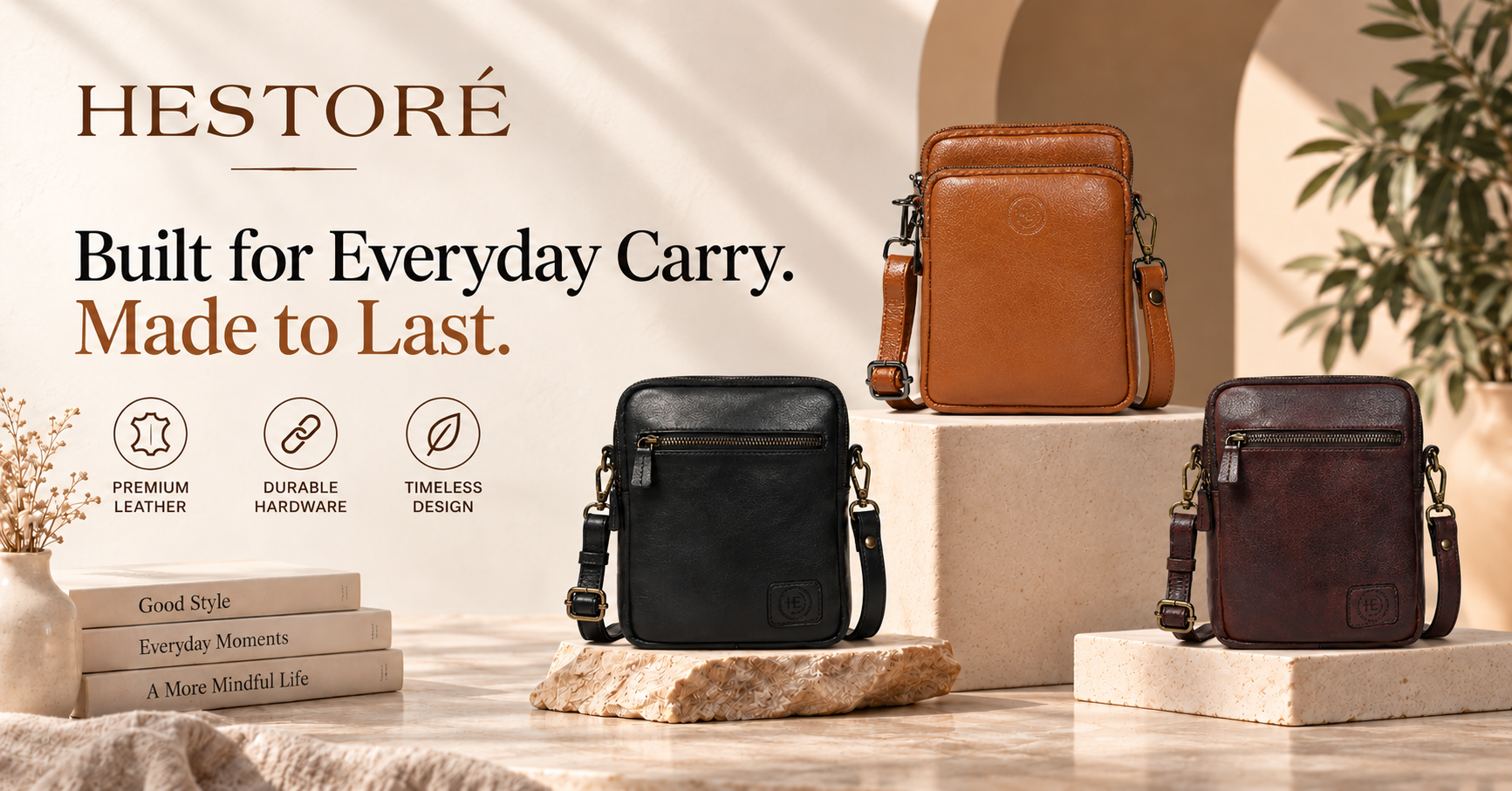
Hestore is one I stumbled onto more recently, and it's become the one I recommend to friends who want full-grain leather without paying luxury-brand markup. The finishing is cleaner than you'd expect at that price point, and the sizing options actually match what most guys need for daily use instead of forcing you into something bulkier.
Fossil's leather crossbody options hit a nice balance of price and quality for guys who want something reliable without spending a fortune. The leather softens nicely with use.
Saddleback Leather makes bags meant to outlast you: thick, heavy-duty full-grain construction with a 100-year warranty to back that up. Pricier, but if you want one bag for the next couple of decades, this is the category to look in.
Bellroy leans minimalist: Their crossbody and sling designs are built for people who genuinely just want to carry the essentials without extra flaps and pockets they'll never use.
Breaking It In
New leather always starts out stiff, that's just how it goes, so there's no need to force it to soften up faster. Just wearing it normally and letting it flex against the body does the job over time. Soaking it or leaving it out in direct sun to speed things along usually backfires, drying it out and cracking the surface instead. A bit of leather conditioner every few months goes a long way toward keeping it soft and stopping it from getting brittle down the line.
FAQs
Is a leather crossbody bag actually practical for men, or is it more of a style thing?
Mostly practical. Hands stay free, the phone and wallet are right there, and the smaller size keeps overpacking in check. Looking good is just a nice side effect.
How do you know if it's real leather and not some synthetic copy?
Smell it first, honestly. Real leather has this earthy sort of smell that cheap synthetic stuff just can't fake. It also feels a bit warm when touched, not cold and rubbery like plastic. One trick that actually works: push a finger into it. Real leather leaves a little dent that slowly fades away, while fake leather just snaps back instantly like nothing happened.
Can a leather crossbody bag work with a suit, or does it read too casual?
A slim, structured one in black or dark brown pairs fine with business casual, even some suits, as long as it's not stuffed full. For anything more formal, smaller and lower profile wins over anything bulky.
How often does the leather need conditioning, and does climate change that?
Every three or four months is a fair starting point. Hot, dry air or a lot of cold weather means doing it more, while humid climates need it less.
Does the strap stretch or wear out, and is that something that can be fixed?
A bit of stretch early on is just the leather breaking in, nothing to worry about. If the stitching or a buckle gives out down the road, a local leather shop can usually fix it, no need to buy a whole new bag.
The Bottom Line
A good leather crossbody ends up being more than just a bag, it turns into the thing that gets grabbed on the way out the door without a second thought. Spending a bit more on real leather and solid hardware, and sizing it around actual daily habits instead of some hypothetical busy day, pays off since it only gets better looking with time. Not many things people own can say the same.