Cart
0
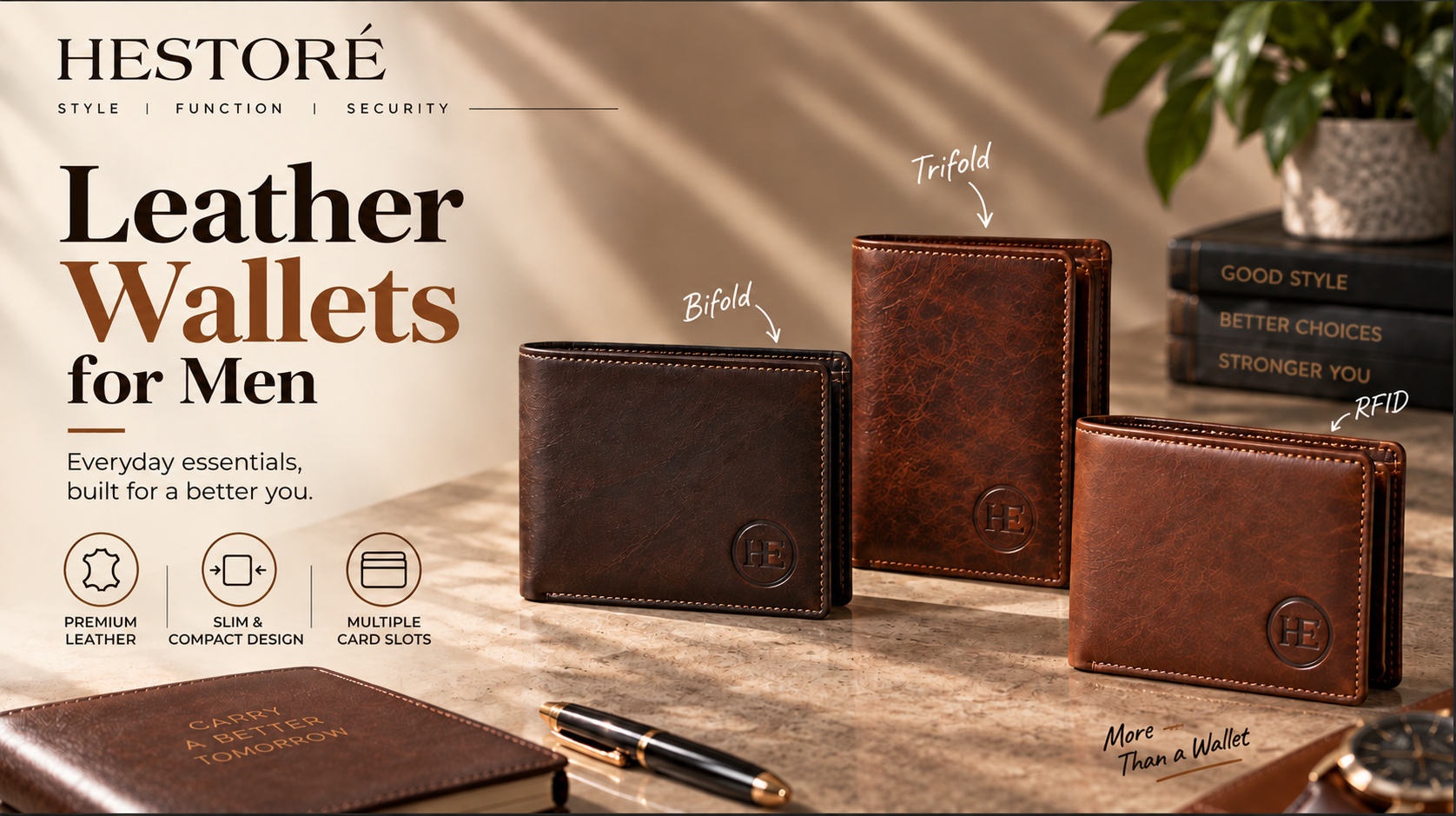
Most guys don't put much thought into their wallet. You pick one that looks okay, carry it around for years, and forget about it until the stitching gives way or the leather splits right at the fold. 2026 changes that a bit. With almost every card in your pocket now tap-enabled, the best leather wallet for men isn't just the one that looks good, it's the one that holds up and keeps your cards from being read by someone standing a little too close with the wrong kind of scanner. That's a big part of why RFID-blocking wallet searches have shot up lately. People aren't just buying wallets anymore, they're buying protection too.
This guide gets into the classic argument, bifold vs trifold wallet, plus a few other things worth thinking about before you spend your money on the next one.
Why Leather Still Wins
Honestly, vegan leather has gotten decent, but it's still not the same thing. Real leather breaks in. Mine's got a few scratches near the card slot from keys rubbing against it in my bag, and instead of looking beat up, it just looks lived in, like a pair of jeans you've had forever. Cheap synthetic wallets tend to peel at the edges within a year. Full-grain and top-grain don't do that. My last one lasted almost six years before I finally switched it out, and even then the leather itself was fine, I just wanted a change.
A few practical things to check before you actually buy the best leather wallet for men:
- Full-grain or top-grain leather, it just lasts longer
- Stitched seams, not glued ones, since glue gives out first
- A compact size so it doesn't turn into a brick in your pocket
- An RFID-blocking lining if you tap to pay often
Now for the part most people actually get stuck on: bifold or trifold?
Bifold vs Trifold Wallet: Which One Fits You Better
Bifold Wallets

A bifold folds once down the middle, giving you a slim, rectangular shape. It usually has a handful of card slots, a cash section, and sometimes a small ID window.
What works in its favor:
- Slim and easy to carry
- Slides in and out of pockets without effort
- Classic, minimal look
- Lighter than most trifolds
Where it falls short:
- Not much room for extra cards
- Cards can get stacked on top of each other, making it slower to find the right one
If you're someone who carries just a few essentials, a couple of cards, some cash, maybe a metro card, a bifold is probably enough.
Trifold Wallets

Trifolds fold twice, which gives you three sections instead of two. That extra fold means more card slots and sometimes a coin pouch or additional ID space.
What works in its favor:
- More room for cards
- Easier to keep things organised if you carry a lot
- Good fit for men who need cash, cards, and IDs all in one place
Where it falls short:
- Bulkier in a front pocket
- Can start to feel heavy after a while
If your day-to-day involves multiple cards, business cards, or extra cash, a trifold will probably serve you better even if it's a bit thicker.
So Which One Should You Pick
There's no single right answer in the bifold vs trifold wallet debate. It really depends on how you live. If you prefer travelling light and keeping things in your back pocket, go bifold. If storage matters more to you than slimness, go trifold. A lot of 2026 wallet designs have also started blending the two, slim trifolds that hold like a trifold but feel almost as thin as a bifold. Worth a look if you can't decide.
Why an RFID Wallet Matters

With tap-to-pay debit and credit cards, Apple Pay, Google Pay, and NFC-enabled ID cards (like some driver's licenses and passports) now common across the US, RFID skimming has become a real concern. Skimming devices can pick up card data from a short distance without ever touching your wallet.
That's why RFID-blocking wallets have caught on. They work by weaving a thin layer of metallic fabric into the lining, which acts like a shield — it blocks radio signals from reaching your cards, so nobody can scan your data without you knowing.
Do You Actually Need One
If you regularly carry any of these, it's probably worth it:
- Contactless debit or credit cards
- NFC-enabled work or government ID badges
- Transit cards (subway, bus passes)
Most decent leather wallet brands in the US now build RFID protection in as standard, so you're rarely paying extra for it. It just means checking the product listing before you buy.
How to Pick the Right One in 2026
- Think about how you actually carry things. Cards only, or cards plus cash plus documents?
- Decide on the fold. Bifold for slim, trifold for storage.
- Check for RFID blocking, especially if you use contactless cards often.
- Look at the leather grade. Full-grain lasts the longest, genuine leather is a solid budget option.
- Check the stitching and hardware. Reinforced edges and decent zippers or snaps hold up longer.
- Pick a colour that works for you. Brown and black stay versatile, and matte finishes are having a moment in 2026.
A Few Extra Things Worth Checking
- A slim profile, under 1 cm for most bifolds
- At least 6 to 8 card slots if you're going trifold
- A coin pocket if you handle cash often
- Clear mention of RFID-blocking in the product description
- Some kind of warranty or craftsmanship guarantee from the brand
Final Thoughts
Picking a leather wallet in 2026 isn't complicated. It comes down to what you carry, whether card protection matters to you, and how much you care about the leather. Slim bifold if you like keeping things light, trifold if you carry a lot, hybrid if RFID protection matters. Good leather ages well and lasts years, cheap stuff falls apart fast. Worth checking out Hestore if you want a place to start; they've got a decent range across all three styles.
FAQs
1. Bifold or trifold, which one's better?
Depends how you carry stuff. Bifold if you like things slim, trifold if you need more card slots.
2. Do I really need an RFID wallet?
If you tap to pay or use an NFC work badge, yeah, it's worth it. Cheap insurance against your card getting scanned without you knowing.
3. What's the best leather for a wallet?
Full-grain, hands down. Top-grain's a solid second. Genuine leather works fine if you're on a budget.
4. How long does a leather wallet actually last?
Mine lasted six years. A well-made one should easily give you 5 to 10 with basic care.
5. Will RFID blocking mess with my cards?
Not at all. It only stops scanning from a distance. Tap, swipe, insert, all still work normal.
6. Can a slim wallet hold cash too?
Yeah, most slim bifolds and hybrid trifolds have a small cash slot built in. No need for a separate cash clip.